

|
Quantity
|
Out of stock
|
||
|
|
|||
|
|
|||
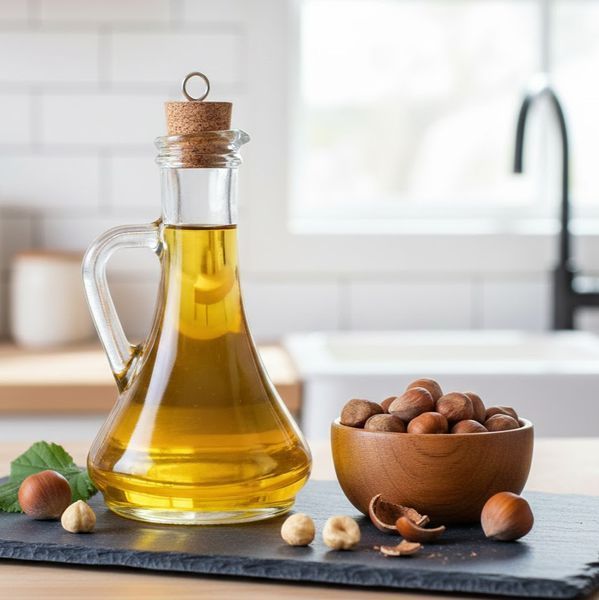
Hazelnut Oil: A Universal Natural Ingredient for Skin, Hair, and Cooking
Hazelnut oil (INCI: Corylus Avellana Seed Oil) is a valuable natural product obtained by pressing hazelnut kernels. It is rich in oleic acid, vitamin E, and other biologically active components, which makes it a combination of high cosmetic properties and excellent taste. The oil is famous for its astringent and toning effect, light texture and ability to be quickly absorbed without feeling greasy.
Main characteristics of hazelnut oil
| Parameter | Description |
|---|---|
| Name in Ukrainian | Hazelnut oil |
| Name in English | Hazelnut Oil |
| INCI | Corylus Avellana Seed Oil |
| Origin | Vegetable, obtained from hazelnut kernels |
| Main ingredients | Oleic acid, vitamin E, healthy fats |
| Texture | Light, non-greasy, quickly absorbed |
| Type of effect on the skin | Astringent, toning, antioxidant |
Cosmetic properties and benefits for the skin
Hazelnut oil is a popular ingredient in natural and professional facial and body skin care. Thanks to its balanced composition, it is suitable for daily use in various cosmetics, especially for combination, oily and mature skin.
Main benefits for the skin
- Tightens and tones the skin. Astringent properties help to slightly narrow pores, improve skin texture and give it a more toned appearance.
- Antioxidant protection. The vitamin E content helps to neutralize the effects of free radicals, maintaining youthfulness and elasticity of the skin.
- Non-greasy and light texture. Hazelnut oil does not leave a sticky or heavy film, is quickly absorbed and is suitable even for daily day care.
- Balanced care for combination skin. The astringent effect helps to control shine in the T-zone, while not overdrying normal or slightly dry skin. areas.
Use in skin care products
Hazelnut oil is widely used in various cosmetic formulas:
- Facial oils. In pure form or as part of complex oil blends for daily care.
- Tonics and serums. In low concentrations, it is added to tonics to enhance the astringent and protective effect.
- Creams and fluids. Suitable as a light base oil in day and night creams, especially for combination and normal skin.
- Products for problem skin. Can be used in formulas for oily and acne-prone skin, as it does not create an excessively heavy film.
Examples of hazelnut oil use in home care
- Light overnight facial oil. Apply a few drops of hazelnut oil to damp skin after tonic, distribute with gentle massage movements.
- Cream enrichment. Add 1-2 drops of hazelnut oil to a portion of your favorite cream immediately before application to enhance the nourishing and antioxidant properties.
- Oil toner. Add a small amount of hazelnut oil to a hydrosol or toner, shake vigorously and apply to the skin for gentle toning.
Benefits for hair and scalp care
In hair care, hazelnut oil is valued for its lightness and ability not to weigh down strands. It is suitable for fine, normal and slightly dry hair, and can also be used on the scalp.
Use in hair products
- Light conditioners. Hazelnut oil is included in balms and conditioners, giving hair softness, shine and a well-groomed appearance without weighing it down.
- End serums. A small amount can be applied to the ends of the hair to reduce brittleness and dryness.
- Scalp massage. The light texture allows you to use the oil for a gentle nourishing scalp massage.
Use in make-up
Hazelnut oil is a useful ingredient in make-up due to its gentle effect on the skin and its ability to effectively dissolve impurities and pigments.
Basic directions of application
- Makeup removers. Hazelnut oil is great for gently removing makeup from the face and eyes without overdrying the skin.
- Oil balms and micellar oils. Used as an ingredient in oil cleansers for delicate daily cleansing.
- Lip balms and lipsticks. Can be used in lip products, providing nourishment and comfort without stickiness.
Culinary uses of hazelnut oil
In addition to its cosmetic properties, hazelnut oil is widely used in cooking, especially in gourmet dishes and desserts. It has a pleasant nutty aroma and taste, which makes it a bright accent in many recipes.
Main culinary benefits
- Nutty flavor for dishes. Adds a distinctive hazelnut flavor to salads, appetizers, hot dishes and desserts.
- Use in fine cooking. Often used by chefs to create unusual flavor combinations in haute cuisine.
- Ideal for baking. Can be added to dough, fillings, creams and sauces, emphasizing the nutty notes of desserts.
- Rich in healthy fats. Contains healthy fats that can complement a balanced diet.
Examples of culinary uses
- Salad dressings. Mix hazelnut oil with balsamic or wine vinegar, add mustard and spices for a fragrant dressing.
- Desserts. Use the oil in baking, add to creams, mousses, ice cream or pour it over ready-made desserts to enhance the nutty flavor.
- Gourmet dishes. A few drops of hazelnut oil before serving can give a new flavor accent to a dish.
Areas of use of hazelnut oil
| Area | Examples of use |
|---|---|
| Skin care | Face oils and tonics, creams, serums, products for problem and combination skin |
| Hair care | Light conditioners, masks, serums for the ends, massage oils for the scalp |
| Cosmetics | Makeup removers, oil balms, lipsticks and lip balms |
| Food industry | Salads, desserts, fine cooking, baking, sauces, dressings |
Conclusion
Hazelnut oil is a multifunctional natural product that combines cosmetic and culinary benefits. It tightens and tones the skin, provides antioxidant protection, does not leave a greasy shine and is easily absorbed. In hair care, it acts as a light nourishing component, and in cooking, it gives dishes an exquisite nutty flavor. Due to its versatility, hazelnut oil will become a useful ingredient both in home cosmetic recipes and in the kitchen.