

|
Quantity
|
Out of stock
|
||
|
|
|||
|
|
|||
Product Description
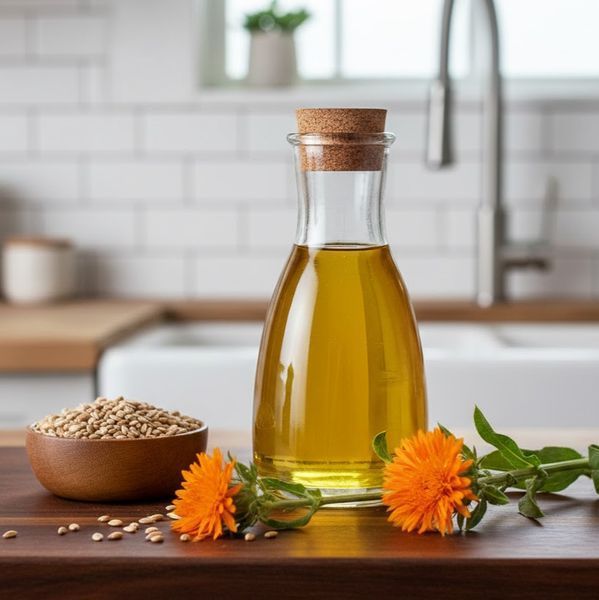
Safflower oil (INCI: Carthamus tinctorius seed oil) is a natural vegetable oil obtained by pressing safflower seeds. It is presented in two main types: with a high content of oleic or linoleic acid. Due to its balanced fatty acid composition, soft texture and neutral aroma, safflower oil is widely used in cosmetics, skin and hair care products, as well as in the food industry.
Chemical composition and properties
Safflower oil is valued for its high content of unsaturated fatty acids and pleasant sensory characteristics. High-oleic safflower oil is more resistant to oxidation, while high-linoleic is especially beneficial for dry and dehydrated skin.
| Parameter | Characteristics |
|---|---|
| INCI | Carthamus tinctorius seed oil |
| Origin | Vegetable oil from safflower seeds |
| Essential fatty acids | Oleic, linoleic (varies depending on the type of oil) |
| Texture | Light, non-greasy, well distributed |
| Comedogenicity | Low (non-comedogenic) |
| Fragrance | Neutral or very mild herbal |
Cosmetic Benefits of Safflower Oil
Safflower oil is a multifunctional cosmetic ingredient that is great for daily skin and hair care. It is easily absorbed, does not leave a sticky or greasy feeling and combines well with other oils, emollients and active ingredients.
Main benefits for the skin
- Improves skin hydration. Safflower oil helps retain moisture in the epidermis, reduces dryness and tightness, makes the skin softer and more elastic.
- Non-comedogenic and easily absorbed. Thanks to its light texture, the oil is suitable for combination, normal and even oily skin without clogging pores.
- Supports the skin's barrier function. Unsaturated fatty acids help strengthen the lipid barrier, reduce moisture loss and increase the skin's resistance to external irritants.
- Improves microrelief. Regular use contributes to a more even, smooth and well-groomed skin surface.
Benefits for hair and scalp
- Gives hair softness and shine without weighing it down.
- Makes combing easier and reduces the fragility of dry and damaged strands.
- Helps care for dry scalp, contributing to a comfortable condition and reducing the feeling of dryness.
- It combines well with other care oils (argan, jojoba, almond) in professional oil complexes.
Use in cosmetics and care
Safflower oil is a universal basic component for a wide range of cosmetic formulas. It can be used in both professional products and home cosmetics.
1. Facial and body skin care
In basic formulas for daily skin care, safflower oil is most often used as an emollient and softening component.
- Moisturizers and serums. Safflower oil is ideal for day and night creams, light emulsions, fluids and serums that should provide intense but not heavy hydration.
- Body and hand creams. Thanks to its softening properties, the oil helps reduce dryness, roughness and discomfort of the skin.
- Massage oils. Its light texture and pleasant glide make it a convenient base for massage mixtures, including those with the addition of essential oils.
2. Hair Care
- Conditioning Oils. Safflower oil is a component of leave-in and rinse-out conditioners, oils for the ends, and complexes for restoring the hair structure.
- Hair Masks. In combination with other oils and protein components, it helps nourish and soften dry, colored, and damaged hair.
- Shine Serums. The lightweight formula based on safflower oil does not weigh down the hair and gives it a natural, healthy shine.
3. Cosmetics and care products
Safflower oil is used as a universal component in various types of cosmetic products:
- Creams and lotions. It is used in the formula as an emollient, which improves the texture of the product and evenness of application.
- Lip balms. Helps retain moisture, makes the skin of the lips soft and smooth.
- Cleansing products. Can be included in hydrophilic oils and mild cleansing balms, dissolving makeup and dirt well.
- Scrubs and peels. Serves as a nourishing base for mechanical exfoliants, preventing skin from drying out during exfoliation.
Use in the food industry
In addition to cosmetic purposes, safflower oil is actively used as a valuable food product.
Main nutritional properties
- Used for frying and salad dressings. Due to its stability when heated, it is suitable for everyday cooking.
- Neutral taste. Does not interrupt the taste of other ingredients in dishes, which makes it universal for cold appetizers, salads and marinades.
- High smoking point. Promotes safer and more convenient frying, reduces the risk of burning when following the recommended cooking conditions.
- Rich in unsaturated fats. Contains a significant proportion of mono- and polyunsaturated fatty acids, which are highly valued in modern diets.
Benefits for formulators and manufacturers
Oil Safflower is a convenient raw material for a wide range of industries – from cosmetics to food.
Key benefits in product development
- Good compatibility with most emulsifiers and cosmetic oils.
- Light, pleasant texture, which increases the consumer properties of finished products.
- Versatile use in care and food formulas.
- Low comedogenicity, which expands the possibilities of use for different skin types.
Summary
Safflower oil (Carthamus tinctorius seed oil) is a multifunctional ingredient that is equally valued in cosmetic formulas (moisturizers, serums, conditioning oils, creams and lotions) and in the food industry (frying oil, salad dressing, all-purpose cooking oil). It improves skin hydration, supports its barrier function, is quickly absorbed and does not cause a feeling of heaviness. With its neutral taste and high smoke point, safflower oil is also a convenient and modern choice for everyday cooking.