

|
Quantity
|
Out of stock
|
||
|
|
|||
|
|
|||
Description and origin of rosehip oil
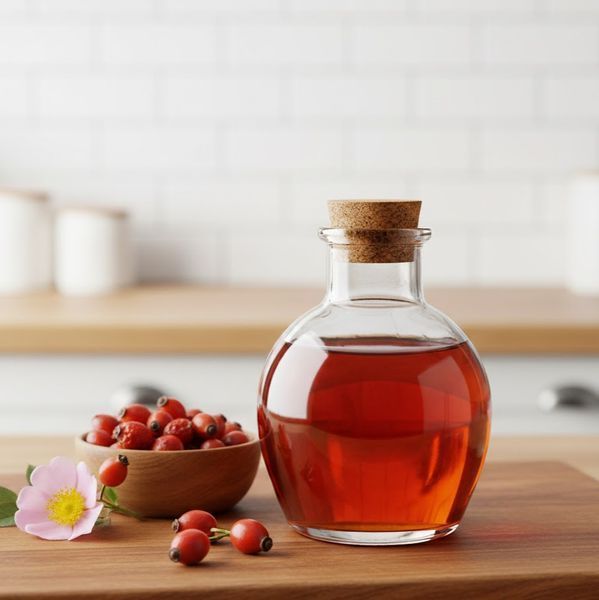
Rosehip oil (INCI: Rosa Canina Fruit Oil / Rosa Moschata Seed Oil) is a valuable natural cosmetic ingredient obtained from the seeds of the rosehip or musk rose. Due to its high concentration of essential fatty acids, natural antioxidants and vitamin C, the oil is known as a powerful regenerative agent for the skin of the face, body and scalp.
This oil is particularly valued in natural cosmetics for its ability to improve skin tone and texture, soften fine wrinkles, reduce the appearance of scars, post-acne marks and pigmentation. It is suitable for use on its own, as well as as an active ingredient in serums, creams, face oils, body and hair products.
Cosmetic properties and benefits of rosehip oil
Main active ingredients
- Essential fatty acids (linoleic, linolenic, oleic) - support the skin's barrier function, prevent moisture loss, promote softness and elasticity.
- Natural antioxidants - help fight free radicals that cause premature aging.
- Vitamin C in its natural form - helps even out skin tone, gives skin radiance and supports collagen synthesis.
Key benefits for the skin
- Reduces visibility of scars and wrinkles – regular use helps to make scars, rash marks and expression lines less noticeable.
- Improves tone and texture – the skin becomes smoother, more even, the feeling of tightness and dryness decreases.
- Provides deep hydration – restores lipid balance, nourishes and softens even very dry and dehydrated skin.
- Supports natural regeneration – promotes cell renewal, especially after exposure to the sun, wind or aggressive procedures.
Uses in skin care, hair and cosmetics
Facial skin care
Rosehip oil is great for daily skin care of various types – from dry to combination. It is easily absorbed, does not leave a heavy greasy film (provided the dosage is moderate) and can be used as a stand-alone product or as part of more complex formulas.
Examples of use for the face:
- Anti-aging serums - the oil is added as an active ingredient in anti-aging formulas to reduce the depth of wrinkles and increase skin elasticity.
- Facial oils - used as a base or co-base oil in mixtures, together with other vegetable oils and essential oils.
- Night care - applied in a thin layer before bedtime for intensive restoration and nutrition.
Body skin care
For the body, rosehip oil is suitable as a component in massage mixtures, after-sun products or care for problem areas with scars, stretch marks, dryness.
- Helps make the skin more elastic and smooth.
- Supports recovery after exposure to the sun and cold air.
- Can be applied locally to scars and uneven relief.
Hair and scalp care
In hair products, rosehip oil is used primarily for scalp care:
- Scalp products - in the form of oil masks or serums to soften, reduce dryness and irritation.
- Can be included in nourishing mixtures for the ends of the hair, giving them softness and shine.
Use in natural cosmetics
Rosehip oil is a popular ingredient in natural and organic formulas, because combines effectiveness and gentleness.
- Face and body creams with antioxidant and regenerating effects.
- Lip balms, oil serums, massage oil sachets.
- Natural oil blends for mature, dry, damaged skin.
Use in the food industry
Although rosehip oil is a valuable natural product, it is used less often in the food industry than in cosmetics. It is sometimes added to herbal infusions and drinks to enrich them with natural antioxidants and vitamin components.
- Herbal infusions and phyto-teas - a small amount of oil can enhance the antioxidant properties of the drink.
- Source of antioxidants - when consumed in food form, it helps to supplement the diet with natural bioactive substances.
- It is not a common ingredient in traditional cooking, it is more often considered as a functional supplement.
Recommendations for use and storage
Cosmetic use
Rosehip oil can be used in its pure form or as part of combined products. It is recommended to start with a small amount, especially for sensitive or reactive skin, gradually observing the individual reaction.
- Apply a few drops to slightly damp skin for better distribution.
- Use as the last step of care - after toner and serum.
- Can be added to ready-made creams and lotions, mixing thoroughly before application.
Storage
- Store in a tightly closed container, in a place protected from light.
- Avoid prolonged exposure to high temperatures.
- It is recommended to use within the shelf life indicated by the manufacturer on the packaging.
Brief description of rosehip oil
| Parameter | Description |
|---|---|
| Name in Ukrainian | Rosehip Oil |
| Name in English | Rosehip Oil |
| INCI | Rosa Canina Fruit Oil / Rosa Moschata Seed Oil |
| Main properties | Regenerative, moisturizing, softening, antioxidant |
| Cosmetic use | Anti-aging serums, face oils, body products, scalp care |
| Benefits | Reduces the appearance of scars and wrinkles, improves tone and texture, deeply moisturizes |
| Uses in the food industry | Sometimes in herbal infusions as a source of antioxidants; rarely used in cooking |
Conclusion
Rosehip oil is a versatile natural ingredient with pronounced regenerative and moisturizing properties. It is ideal for facial, body and scalp skin care, especially when there is a need to restore, soften and improve the structure of the skin. Due to its rich composition, this oil has become an indispensable component of natural cosmetics, anti-aging serums and care formulas for sensitive and mature skin.