

|
Quantity
|
Out of stock
|
||
|
|
|||
|
|
|||
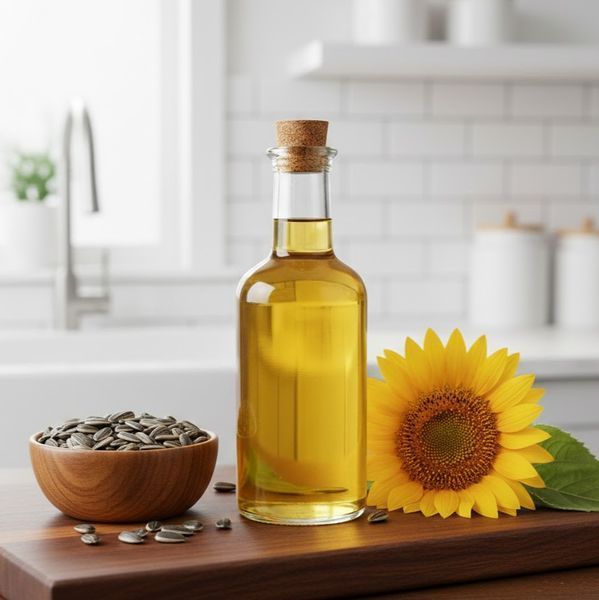
Sunflower Oil: A Versatile Ingredient for Cosmetics and Care
Sunflower oil (INCI: Helianthus Annuus (Sunflower) Seed Oil) is a light, well-balanced vegetable oil obtained from high-quality sunflower seeds. Due to its natural content of linoleic acid, vitamin E and a complex of antioxidants, it is widely used in professional cosmetic formulas, home care products, as well as in related industries.
The oil is characterized by a delicate texture, rapid absorption and the absence of a greasy film on the skin or hair. This makes it an ideal base for creams, lotions, balms, serums, emulsions, make-up removers and scalp care products.
Composition and active ingredients
Sunflower oil is a natural source of valuable bioactive substances important for the beauty and health of skin and hair.
| Component | Role in care |
|---|---|
| Linoleic acid (ω-6) | Supporting the skin's lipid barrier, reducing dryness and flaking |
| Vitamin E (tocopherols) | Powerful antioxidant, protection against free radicals and premature aging |
| Plant-derived antioxidants | Improving formula stability, maintaining healthy skin and hair |
| Unsaturated fatty acids | Nutrition, softness, elasticity, prevention of dehydration |
Benefits of sunflower oil
Due to its balanced composition, sunflower oil combines several key advantages for cosmetic and care products.
Main properties
- Rich in antioxidants – helps protect skin and hair cells from oxidative stress.
- Light texture – quickly absorbed, does not overload the skin, does not leave a sticky or greasy layer.
- Intensive hydration – helps retain moisture, reduces the feeling of tightness and dryness.
- Suitable for sensitive skin – mild action, without aggressive components, minimal risk of irritation when used correctly.
- Improvement of barrier function – supports the natural hydrolipid balance of the epidermis.
Application in skin care
Sunflower oil is widely used both in ready-made cosmetic products and in home recipes. It combines well with other plant oils, active ingredients and extracts.
Main uses
- Lotions and creams for the face and body
- Facial oils and massage mixtures
- Nourishing balms for dry skin
- Soothing products after sun or peeling
Benefits for the skin
- Moisturizing and softening
Sunflower oil helps reduce dryness, makes the skin more elastic and well-groomed. - Supporting the protective barrier
Regular use helps strengthen the lipid layer and reduce sensitivity to external factors. - Maintains an even skin tone
Antioxidants and gentle nourishment leave skin looking smoother and more radiant.
Applications in hair care
In hair care, sunflower oil is used as a standalone product or as a functional ingredient in complex formulas.
Product examples
- Hair conditioners and balms
- Masks for dry and damaged hair
- Serums and fluids for the ends
- Scalp care products
Effect on hair and scalp
- Nourishment and shine - helps restore softness and natural shine to hair.
- Reduces dryness - useful for dry, brittle, porous strands.
- Skin comfort scalp – gently softens, helps reduce the feeling of dryness and discomfort.
Use in decorative cosmetics
Due to its light texture and good compatibility with other components, sunflower oil is used in various types of decorative cosmetics.
Product types
- Makeup removers – oil and two-phase formulas, cleansing balms.
- Emulsions – creamy textures with pleasant glide and soft application.
- Balms and lipsticks – lip care, emollients.
The oil facilitates the even distribution of the product over the skin, provides comfort during application and contributes to additional care when using decorative cosmetics. cosmetics.
Food industry uses
In addition to cosmetic applications, sunflower oil can be used in the food industry. It is valued for its mild, neutral taste and balanced nutritional profile. This allows it to be used as an ingredient in the production of various food products, where a delicate oil base without a sharp aroma is required.
Recommendations for use in formulas
Compatibility with other ingredients
- It combines well with most vegetable oils and extracts.
- Can be used as a base oil for the introduction of fat-soluble active ingredients.
- Compatible with emulsifiers to create creams, lotions and emulsions.
Examples of application
| Scope of use | Examples of products |
|---|---|
| Care for skin | Lotions, creams, oils for the face and body |
| Hair care | Conditioners, masks, scalp products, serums |
| Cosmetics | Makeup removers, emulsions, balms |
| Food industry | Products with a mild taste and added value due to fatty acids |
Benefits for manufacturers and formulators
Sunflower oil is a cost-effective and at the same time effective ingredient for a wide range of products:
- Suitable for mass and professional cosmetics segments.
- Contributes to the creation of stable and comfortable formulas.
- Has a positive perception by consumers as a natural and familiar component.
Conclusion
Sunflower oil is a universal ingredient that combines light texture, high biological value and wide application possibilities. It is simultaneously suitable for skin and hair care, use in cosmetics and the food industry. Due to the content of linoleic acid, vitamin E and antioxidants, the oil provides hydration, nutrition and protection, helping to maintain a healthy and well-groomed appearance of skin and hair.